August 25, 2026
The Safety Detail Most South African Businesses Keep Getting Wrong
Every business owner thinks about safety. Fire exits are marked. Equipment is maintained. Health and safety policies are drafted and filed. But there is one safety risk that sits in plain sight at almost every commercial premises in the country, and it rarely gets the serious attention it deserves.
It is the floor. Specifically, what is happening at the entrance where most incidents actually begin.
Where the Risk Really Lives
Slip and fall incidents are among the most common causes of injury claims in commercial environments. They happen in retail stores, office buildings, hospitals, hotels, restaurants, and warehouses. The common thread across most of them is not negligence in the dramatic sense. It is inattention to the ordinary reality of what happens when wet or muddy footwear meets a hard indoor surface.
People walk in from a rainy car park. They track in fine dust from a construction site across the road. Their soles carry grease from a service area into a customer-facing space. These are everyday realities for high-traffic South African businesses, and without proper mitigation at the entry point, every single one of them creates a slip hazard.
Why Entrance Matting Is a Safety Investment, Not a Decorative One
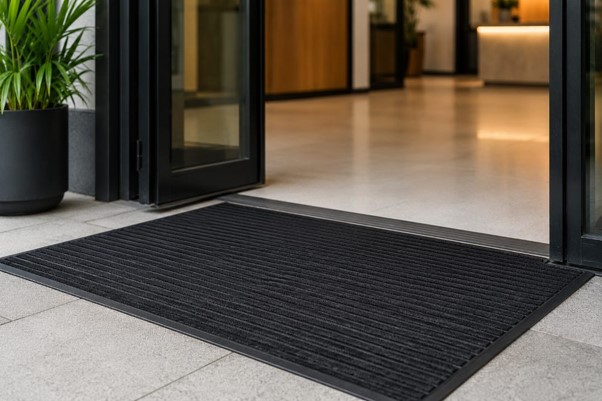
The function of a well-specified entrance mat is mechanical. It physically removes debris, moisture, and contaminants from shoe soles before they transfer to interior flooring. A mat that performs this function well keeps the floor drier, cleaner, and measurably safer for everyone who follows.
Durable safety mats South Africa businesses need to take seriously are not the flimsy, decorative options that compress flat after a week of foot traffic. They are purpose-built solutions using materials selected for longevity, grip, and consistent performance under sustained use. The difference between a mat that lasts three months and one that holds up for years is not a small thing. It is thousands of pairs of feet either being protected or being put at risk.
The High-Traffic Reality
Not all entrances are created equal. A suburban office building with modest daily visitor numbers faces a different challenge than a supermarket, a hospital, or a transport terminal. The sheer volume of foot traffic through some commercial entrances means that matting solutions need to be engineered for relentless use without degrading in performance.
A well-designed rubber scraper mat for high-traffic areas provides consistent scraping action that holds up across thousands of passes per day. The construction does not flatten, the grip does not disappear, and the mat does not start curling at the edges and creating trip hazards of its own. That kind of reliability is what serious commercial operations need to plan around.
The Liability Picture Is Clearer Than Most Realize
South African occupational health and safety legislation is clear that employers have a duty to maintain safe working environments. For businesses that serve the public, that duty extends to the spaces customers and visitors occupy as well. An incident that occurs because an entrance was slippery and improperly matted does not just result in a human injury. It results in a claim, a legal process, and a reputational question that is difficult to answer well.
The cost of getting proper matting in place is always going to be lower than the cost of a single serious incident. That calculation is not complicated, but it does require businesses to stop treating entrance matting as a line item to minimize.
Making the Right Call Before Something Goes Wrong
The best time to address a safety gap is before it becomes an incident. For many South African businesses, entrance matting is one of the simplest, most cost-effective safety improvements available. It does not require a renovation or a lengthy procurement process.
It just requires making the call and choosing solutions built to do the job properly. Your visitors and your team deserve a floor that keeps them safe from the very first step.


Leave a Reply