May 14, 2026
Everybody Is Talking About AI. But Is It Actually Doing Anything Useful for Your Business?
Fair question. And an important one.
Because if you have spent any time online in the last couple of years, you will have noticed that AI has gone from a niche tech conversation to something that absolutely everyone has an opinion on. Your LinkedIn feed is full of it. Business podcasts will not shut up about it. Even your neighbour who runs a small landscaping company has started asking whether he should be using it.
But here is the thing. A lot of the noise around AI is exactly that. Noise. Hype dressed up as insight. Bold claims with very little underneath them.
So what is actually worth paying attention to? And more to the point, what can genuinely help you attract more of the right customers without adding more chaos to an already busy working life?
That is what this is really about.
The Honest Starting Point
Most small and medium sized businesses in the UK are not struggling because they lack talent. They are not struggling because their product or service is poor. They are struggling because finding and converting new customers is genuinely hard, time consuming work that nobody properly prepares you for.
You can be the best accountant in Manchester or the most reliable builder in Bristol and still find yourself lying awake at night wondering where the next job is coming from.
That particular kind of worry is one of the most common and least talked about parts of running a business. It sits quietly in the background of every decision you make. And over time, it wears you down.
Anything that can genuinely ease that pressure deserves serious attention. Even if it comes with a bit of a learning curve.
What AI Is Actually Good At
Here is where it helps to get practical rather than philosophical.
AI is not magic. It cannot replace the human relationships at the heart of any good business. It cannot do the hard emotional work of understanding what a client actually needs or building the kind of trust that turns a one off purchase into a loyal long term relationship.
But what it can do is handle the repetitive, time heavy parts of the process that drain your energy without adding much value when done manually.
Sorting through data to find patterns. Identifying which type of prospect is most likely to convert based on past behaviour. Writing first draft outreach messages that you then personalise. Scoring enquiries so you know which ones to prioritise. Keeping track of where every potential client sits in your pipeline without you having to update a spreadsheet at 9pm when you are already exhausted.
That kind of support is not flashy. But it is genuinely useful.
Why Timing Has Never Been Better
Something shifted in the last few years that is worth acknowledging. These tools used to be expensive and complicated. The kind of thing only big companies with dedicated tech teams could afford to implement properly.
That is no longer true.
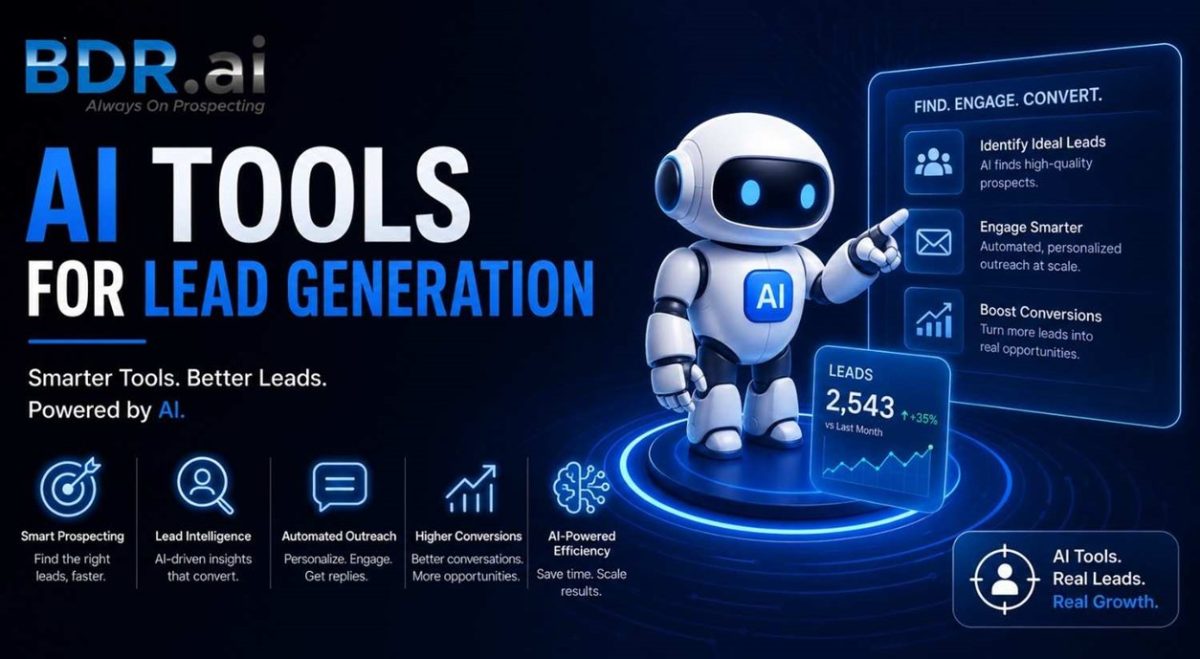
AI tools for lead generation have become far more accessible, far more affordable, and far more user friendly than most people realise. You do not need a computer science degree. You do not need a massive budget. You need a bit of curiosity and a willingness to try something new, which, if you have built a business from scratch, you almost certainly already have in abundance.
The businesses getting ahead right now are not necessarily the biggest or the best funded. They are the ones who spotted an opportunity early and were brave enough to explore it.
The Bit That Catches Most People Out
There is a temptation, once you discover that technology can help with parts of your process, to hand everything over and step back. Let the machine do it. Sit on the beach. Watch the leads roll in.
That is not how it works. And the sooner that fantasy gets put to rest the better.
AI works best as a partner, not a replacement. It amplifies what you are already doing. Which means if your messaging is unclear, it will amplify that too. If you have no real sense of who your ideal client is, the tools will flounder along with you.
The foundation still has to be solid. And the foundation is always human. Who are you trying to help? What do they need to hear? Why should they trust you over anyone else?
Get those answers right and then bring in the right AI tools for lead generation to help you reach more of those people, more consistently, with less effort than doing it all by hand.
What a Smarter Approach Actually Looks Like Day to Day
Picture this. You start your morning knowing exactly which five prospects need a follow up today. Not because you stayed up late going through your inbox. Because your system flagged them automatically based on where they are in the journey and how long it has been since the last touchpoint.
You send personalised messages in half the time because you have a framework that gives you a strong starting point to work from. You review which of your recent outreach efforts actually led to conversations and which ones fell flat, and you adjust accordingly.
None of this requires you to be a tech genius. It just requires a bit of setup, a bit of patience, and a genuine commitment to doing things more smartly rather than just more frantically.
A Thought to Leave You With
The businesses that will look back on this period in five years and feel good about it are the ones paying attention now. Not jumping at every shiny new thing. But thoughtfully figuring out what actually helps and building that into how they work.
AI is not going away. The question is simply whether it is working for you or whether you are leaving an advantage sitting on the table.
That choice, right now, is entirely yours.



Leave a Reply