April 20, 2026
The First 24 Hours After a Home Water Disaster: A Step-by-Step Survival Guide
One minute, everything is fine. Next, you are standing in two inches of water, watching your home transform into something unrecognizable. Whether it’s a burst pipe, an overflowing appliance, or a brutal storm, a home water disaster hits fast, and what you do in the first 24 hours determines everything. This isn’t the time to panic. It’s time to move smart.
Water Emergency at Home? Here’s Exactly What You Need to Do in the First 24 Hours
Hour 1-2: Stop the Source and Stay Safe
Before you touch anything, cut off the water supply. Find your main shutoff valve and turn it off immediately. If the flooding involves your electrical panel or you suspect any wiring is underwater, don’t walk through the water. Shut off the electricity at the breaker first.
Your safety comes before your stuff. Always. Once it’s safe to move around, document everything with your phone. Photos and videos of every affected room, wall, floor, and item will be critical for your insurance claim later. Don’t skip this step.
Hour 2-4: Call Your Insurance Company
Don’t wait until morning. Most homeowners’ insurance policies have a 24-hour claims line, and the sooner you report the damage, the sooner the process starts. Walk them through what happened, share your documentation, and ask specifically what your policy covers. Keep a written log of every conversation — who you spoke with, what time, and what they said.
Hour 4-8: Start Removing Water Immediately
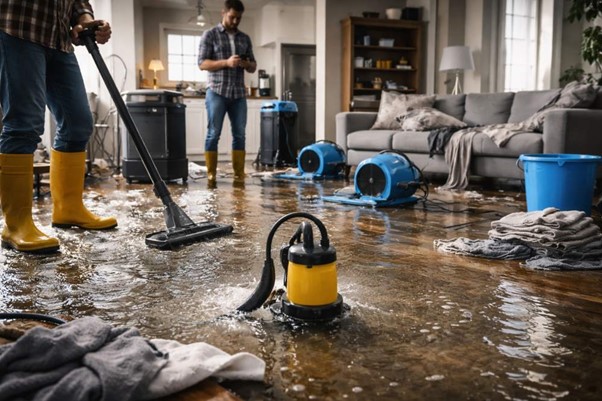
Standing water is your worst enemy right now. Every hour it sits, it soaks deeper into flooring, drywall, and structural materials. If you have a wet/dry vacuum, use it. Mops, towels, buckets — whatever you have access to, start pulling water out. Open windows and doors if the weather allows. Run fans and dehumidifiers if you have them. Ventilation slows mold growth, which can begin in as little as 24 to 48 hours.
So when you think, what to do immediately after water floods my home? Shut off the water and electricity if it’s safe, document all damage with photos, contact your insurance provider right away, and begin removing standing water as quickly as possible to prevent mold and structural damage.
Hour 8-12: Tackle the Basement First
If water has reached your lower level, this becomes your immediate priority. A flooded basement cleanup isn’t just about removing water; it’s about checking for sewage contamination, inspecting your sump pump, and assessing foundation walls for cracks or seepage. Contaminated water carries serious health risks, so wear protective gloves and boots before going down there.
Hour 12-24: Assess the Full Damage and Call Professionals
By now, you have a clearer picture of the scope. Some damage you can manage yourself — but structural issues, soaked insulation, or extensive mold risk require professional eyes. This is when water damage restoration specialists become invaluable. They carry industrial-grade drying equipment and the expertise to catch hidden moisture that a household fan simply can’t address.
The Clock Is Already Running
Water damage compounds fast. Every hour you delay, repair costs climb and health risks grow. The homeowners who recover quickest aren’t the ones who had the least damage. They’re the ones who acted immediately and decisively. You now know exactly what to do. Start with step one.


Leave a Reply